Catastrophic Landslide in Sudan’s Marra Mountains Kills Over 1,000
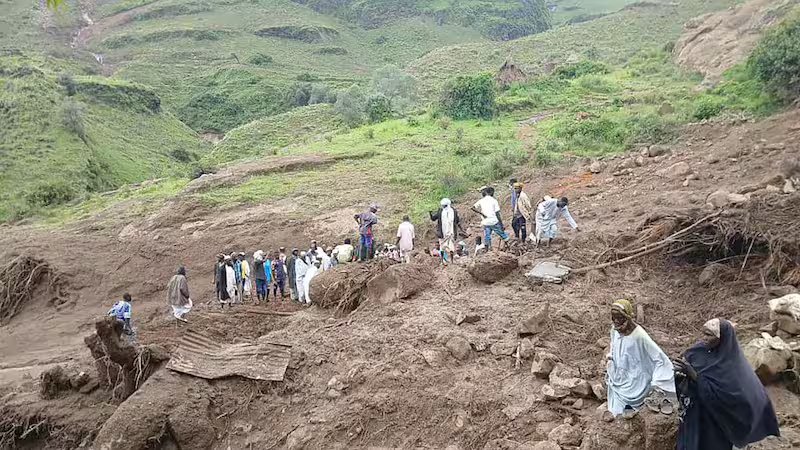
A devastating landslide has struck a remote village in the Marra Mountains of western Sudan, claiming more than 1,000 lives and leaving only one person alive. The tragedy, triggered by days of torrential rainfall, has left the village completely buried under tons of debris.
Authorities and local organizations describe the scene as apocalyptic, with rescue operations facing severe challenges due to the remote location, damaged infrastructure, and persistent rain.
Key Facts About the Disaster
| Statistic | Details |
|---|---|
| Confirmed Deaths | 1,000+ |
| Survivors | 1 rescued alive |
| Area Affected | Entire village destroyed |
| Location | Marra Mountains, Darfur, western Sudan |
| Cause | Prolonged heavy rainfall |
Weather and Environmental Factors
Meteorologists report that rainfall in Darfur exceeded normal seasonal averages, saturating steep slopes and causing a catastrophic landslide. Climate experts warn that extreme weather events like this are becoming more frequent in the Horn of Africa due to shifting precipitation patterns.
Challenges for Rescue Teams
Emergency operations are hindered by multiple factors:
- Remote location: Difficult access to the village
- Ongoing rainfall: Hampering recovery and search efforts
- Infrastructure damage: Roads and communication networks disrupted
- Security concerns: Regional instability affecting aid delivery
- Limited resources: Shortage of equipment for large-scale recovery
Regional Vulnerabilities
The Marra Mountains region consists of scattered rural communities relying on subsistence farming and livestock, making them highly susceptible to natural disasters:
- Lack of early warning systems
- Weak disaster response infrastructure
- Geographic isolation from major cities
- Political instability affecting preparedness
Government and International Response
Sudanese authorities have declared the region a disaster zone and mobilized emergency teams. The Sudan Liberation Movement/Army (SLM/A) has called for urgent international humanitarian assistance to aid survivors and support long-term recovery.
Historical Natural Disasters in Sudan
| Year | Event Type | Location | Impact |
|---|---|---|---|
| 2025 | Landslide | Marra Mountains | 1,000+ deaths |
| 2024 | Floods | Multiple regions | Hundreds displaced |
| 2023 | Drought | Eastern regions | Agricultural losses |
| 2022 | Flash floods | Khartoum area | Infrastructure damage |
Climate Change Implications
Experts link this disaster to climate change, as rising temperatures and changing rainfall patterns increase the frequency of extreme weather events, especially in mountain communities.
Urgent needs include:
- Advanced early warning systems
- Climate-resilient infrastructure
- Stronger disaster preparedness programs
- International support for vulnerable populations
Moving Forward
As rescue efforts continue, priorities include supporting survivors, providing humanitarian aid, and implementing long-term climate adaptation strategies to prevent future tragedies. Local authorities stress the importance of disaster risk reduction programs for remote mountain communities.
Conclusion
The Marra Mountains landslide in Sudan stands as a stark reminder of climate vulnerability and the urgent need for global attention. With over 1,000 lives lost and only one survivor, this tragedy underscores the necessity of resilient infrastructure, early warning systems, and international cooperation in disaster-prone regions.