UNESCO Warns of Global Teacher Shortage: 40 Million Needed by 2030
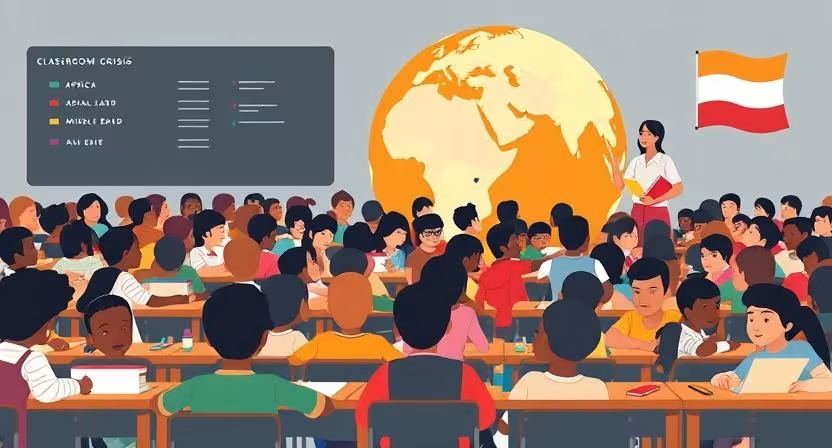
The world faces an urgent education crisis as UNESCO estimates that 44 million teachers will be required by 2030 to meet growing student demand. Without swift action, the shortage risks undermining global efforts to achieve universal access to quality education.
Key Global Findings
- Sub-Saharan Africa must nearly double its workforce, from 8 million teachers today to 15 million by 2030.
- South and South-East Asia, already home to the largest teacher population (22 million), still needs an additional 12 million educators.
- Middle East and North Africa (MENA) face a gap of around 4 million.
- Europe and North America require millions more teachers to maintain current education standards.
Teacher Attrition Rates
| Year | Percentage of Primary Teachers Leaving the Profession |
|---|---|
| 2015 | 4.6% |
| 2022 | 9% |
Attrition is intensifying the crisis. Many teachers leave within their first five years, citing low pay, burnout, and overwhelming workloads.
Regional Spotlight: Middle East & North Africa
The report highlights major disparities in student–teacher ratios across MENA:
- Lebanon & Syria: 40–49 students per teacher
- Egypt: 30–39 students per teacher
- Algeria, Morocco & Palestine: 20–29 students per teacher
- Gulf States & others: generally below 20 students per teacher
Salary levels also vary widely. Countries such as Saudi Arabia, Qatar, and the UAE remain attractive for both local and international teachers due to competitive pay packages.
UAE Outlook: New Academic Year, New Pressures
The UAE is entering the 2025 academic year with added demand for specialist teachers. Two policy changes are driving the need:
- Arabic lessons made compulsory from nursery onwards.
- Artificial Intelligence integrated into curricula, requiring highly skilled instructors.
This combination is expected to strain recruitment efforts, especially in specialised teaching fields.
Consequences of the Shortage
The UNESCO Teacher Task Force warns that without urgent solutions:
- Class sizes will grow, lowering education quality.
- Inequalities will widen, particularly in developing regions.
- Education systems will face mounting financial strain.
Ensuring enough qualified teachers by 2030 is now seen as one of the biggest challenges to achieving global education goals.