Nepal Prime Minister K.P. Sharma Oli Resigns Amid Mass Anti-Corruption Protests
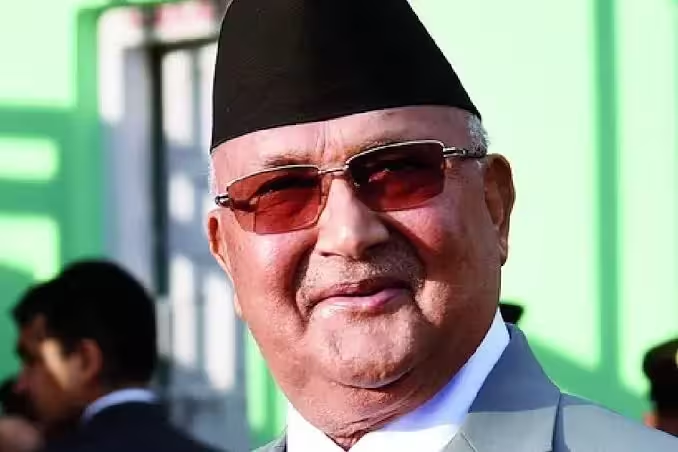
Nepal Prime Minister K.P. Sharma Oli resigned on Tuesday, September 9, 2025, following intense anti-corruption protests across the country.
Demonstrations escalated as protesters, largely from Gen Z, challenged the government’s alleged corruption and recent social media restrictions. The unrest continued despite curfews imposed in three Kathmandu Valley districts from early morning.
Protesters attacked private residences of top political figures, including President Ramchandra Paudel, and vandalised Parliament, marking one of Nepal’s most violent political demonstrations in recent years.
Voting for the vice-presidential election concluded on Tuesday, with 13 members abstaining. This comes amid political uncertainty following the Prime Minister’s resignation.
Key points:
- Prime Minister K.P. Sharma Oli resigns amid nationwide protests
- Curfews imposed in three Kathmandu Valley districts fail to stop demonstrations
- Protesters target private residences of top politicians and Parliament
- Vice-presidential election voting ends, 13 members abstain
- Demonstrations led mainly by Nepal’s Gen Z population
Authorities have deployed additional security forces to maintain order, but demonstrations continue to disrupt normal life in Kathmandu. Analysts warn of a prolonged political crisis unless immediate dialogue is initiated.
Nepal now faces a critical transition period as political parties and the public demand accountability and reforms.
Suggested Table for Quick Facts:
| Event | Details |
|---|---|
| Prime Minister | K.P. Sharma Oli |
| Resignation Date | September 9, 2025 |
| Cause | Anti-corruption protests, social media bans |
| Protest Leaders | Mainly Gen Z |
| Violence | Attacks on politicians’ homes, Parliament vandalized |
| Curfews | Imposed in 3 Kathmandu districts |
| Vice-Presidential Voting | Completed, 13 members abstained |